
Philadelphia Metro
Metro Area Overview
Market Trend Map
Metro Area Overview
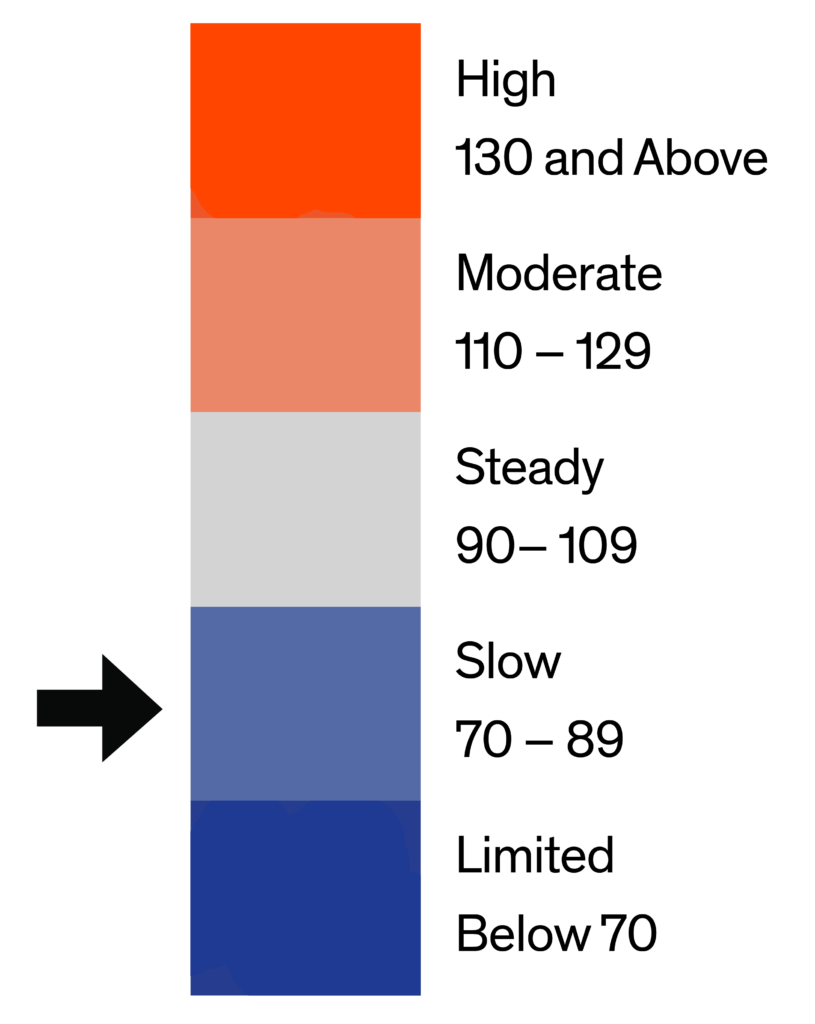
The Home Demand Index (HDI) for the Philadelphia metro area stands at 78 for this report period, down from 89 last month and below the 92 recorded during the same period one year ago. The eleven-point month-over-month decline signals a sharp reversal from the spring reactivation trajectory, as buyer urgency that had been building through April and May appears to have receded more quickly than seasonal norms would suggest — a pattern consistent with affordability constraints and financing sensitivity reasserting pressure as the market transitions from the peak selling period into early summer. The fourteen-point year-over-year deficit indicates that the Philadelphia market is entering the summer period at a softer level than the same period last year, with structural affordability barriers and the elevated cost of financing continuing to suppress the depth of buyer engagement even relative to the more modest prior-year demand environment.
The market trend line, below, provides a high-level monthly overview of the Home Demand Index for each of the metro market areas within the Greater Philadelphia Metro Area. The Home Demand Index is baselined at 100, with 90-110 indicating a steady market. Index values above 110 indicate moderate and high activity while Index values below 90 indicate slower or limited activity. For more information for a given period of time, click on any point on the map to pull up the monthly report.

Metro Market Trend Data by Bright MLS | T3 Home Demand Index
Each of the market areas listed above are defined as follows:
- Central Pennsylvania – Adams, PA; Berks, PA; Cumberland, PA; Dauphin, PA; Franklin, PA; Fulton, PA; Lancaster, PA; Lebanon, PA; Perry, PA; Schuylkill, PA; York, PA;
- Ocean County – Ocean, NJ;
- Philadelphia Metro – Bucks, PA; Burlington, NJ; Camden, NJ; Chester, PA; Delaware, PA; Gloucester, NJ; Kent, DE; Mercer, NJ; Montgomery, PA; New Castle, DE; Philadelphia, PA;
- Salem-Cumberland – Cumberland, NJ; Salem, NJ;
Market Trend Map
The Market Trend Map for the Philadelphia Metro pulls the county map from the monthly reports and combines to provide a time-lapse of the overall market. Use the navigation at the bottom to toggle between months.

Philadelphia Metro County-Level Market Trend Map | Home Demand Index
Current Market Report
Last 6 Market Reports
Historical Market Reports
Data Download
Philadelphia | June 2026
Home Demand Index
The Home Demand Index (HDI) for the Philadelphia metro area stands at 78 for this report period, down from 89 last month and below the 92 recorded during the same period one year ago. The eleven-point month-over-month decline signals a sharp reversal from the spring reactivation trajectory, as buyer urgency that had been building through April and May appears to have receded more quickly than seasonal norms would suggest — a pattern consistent with affordability constraints and financing sensitivity reasserting pressure as the market transitions from the peak selling period into early summer. The fourteen-point year-over-year deficit indicates that the Philadelphia market is entering the summer period at a softer level than the same period last year, with structural affordability barriers and the elevated cost of financing continuing to suppress the depth of buyer engagement even relative to the more modest prior-year demand environment.
Demand by home type in Philadelphia shows broad softening this period, consistent with the metro-wide index declining to 78 from 89 last month and 92 last year, reflecting a clear pullback in buyer engagement across segments following the spring peak. Entry-level single-family homes registered an index of 68, down from 81 last month and below last year’s 87, reflecting a pronounced pullback in first-time and value-driven buyer engagement as affordability constraints and post-peak seasonal normalization weigh more heavily on the most financing-sensitive tier. The mid-range single-family segment registered 76, down from 81 last month and below last year’s 86, indicating continued easing in move-up demand as spring momentum dissipates and buyers recalibrate expectations. Luxury single-family homes registered 80, down from 82 last month and below last year’s 94, signaling a continued easing in high-end buyer activity as discretionary demand softens after the seasonal peak. Entry-level condos registered 93, down from 119 last month and below last year’s 109, reflecting a meaningful contraction in lower-price attached demand, consistent with reduced first-time buyer participation and tightening affordability conditions. Luxury condos registered 95, down from 122 last month and below last year’s 119, indicating continued normalization in premium attached demand following stronger spring-period activity. Townhomes, rowhouses, and twin homes registered 81, down from 95 last month and below last year’s 97, reflecting a broad-based but orderly pullback in demand as post-spring market conditions moderate across the metro.
Monthly Statistics for June 2026
Home Demand
Index
Index
78
(Slow)
Home Demand Index
from prior month
from prior month
89
Home Demand Index
from prior year
from prior year
92
Index change
from prior month
from prior month
-12.4%
Index change from
same time last year
same time last year
-15.2%
Bright MLS | T3 Home Demand Index
www.homedemandindex.com
Philadelphia | May 2026
Home Demand Index
The Home Demand Index (HDI) for the Philadelphia metro area stands at 87 for this report period, up from 82 last month and below the 92 recorded during the same period one year ago. The five-point month-over-month gain reflects continued spring reactivation in buyer engagement, extending the recovery trajectory established since the prior dip and positioning the market in a stronger month-to-month recovery phase. The five-point year-over-year shortfall indicates the Philadelphia metro has not yet fully aligned with last May’s demand level, with affordability constraints and financing sensitivity continuing to moderate the pace of recovery even as seasonal patterns provide meaningful near-term support.
Demand by home type in Philadelphia shows a mixed but generally improving picture this period, with overall activity rising to an index of 87, up from 82 last month but still below 92 one year ago. Entry-level single-family homes held steady at 78, unchanged month-over-month and below 86 year ago, reflecting continued affordability constraints. Mid-range single-family homes improved to 80 from 70 last month but remain slightly below 82 year ago, while higher-end single-family homes also recorded 80, rising sharply from 62 last month but still below 88 year ago, signaling a strong rebound from last month’s low base. Entry-level condos remained stable at 117, unchanged month-over-month and slightly below 119 year ago, continuing to represent the strongest demand segment, while higher-end condos eased to 118 from 129 last month and are below 126 year ago, reflecting normalization after a stronger prior period. Townhomes and twin homes registered 93, down slightly from 94 last month and below 102 year ago, indicating mild softening in attached housing demand while remaining relatively balanced overall.
Monthly Statistics for May 2026
Home Demand
Index
Index
87
(Slow)
Home Demand Index
from prior month
from prior month
82
Home Demand Index
from prior year
from prior year
92
Index change
from prior month
from prior month
6.1%
Index change from
same time last year
same time last year
-5.4%
Bright MLS | T3 Home Demand Index
www.homedemandindex.com
Philadelphia | April 2026
Home Demand Index
The Home Demand Index (HDI) for the Philadelphia metro area stands at 80 for this report period, up substantially from 65 last month but below the 88 recorded during the same period one year ago. The fifteen-point month-over-month surge reflects a decisive spring reactivation in buyer engagement, marking the strongest sequential improvement in several reporting cycles and signaling that pent-up demand deferred through the winter is now converting into active market participation. The eight-point year-over-year deficit indicates the Philadelphia market has not yet fully closed the gap with last April’s activity level, with affordability constraints and financing sensitivity continuing to temper the pace of demand recovery even as the seasonal tailwind strengthens.
Demand by home type in Philadelphia shows broad-based spring improvement this period, with all segments posting month-over-month gains and several approaching or matching year-ago levels. Entry-level single-family homes rose to 75 from 62 last month but remain below last year’s 87, signaling improving first-time buyer engagement, though affordability in one of the region’s structurally elevated price environments continues to constrain full demand recovery. Mid-range single-family homes advanced to 68 from 55 last month but trail last year’s 76, pointing to move-up activity that is building spring momentum without yet reaching prior-year pace. Luxury single-family homes climbed to 60 from 39 last month but remain well below last year’s 73, indicating selective high-end re-engagement as spring inventory enters the market while year-over-year hesitancy persists in the region’s most discretionary tier—likely influenced by the area’s sensitivity to federal employment dynamics and policy-driven household mobility. Entry-level condos advanced to 114 from 97 last month, slightly below last year’s 118, continuing to serve as a compelling affordability alternative in one of the nation’s most expensive housing markets where the price gap between attached and detached products remains a primary driver of buyer composition. Luxury condos rose to 127 from 93 last month but trail last year’s 128 by just one point, effectively reaching year-over-year parity and signaling that premium attached demand has recovered more completely than any other segment. Townhouses and twin homes advanced to 92 from 78 last month but remain below last year’s 99, reflecting strong spring reactivation in a category that consistently benefits from its combination of space, location, and relative price efficiency across the region’s diverse submarkets.
Monthly Statistics for April 2026
Home Demand
Index
Index
80
(Slow)
Home Demand Index
from prior month
from prior month
65
Home Demand Index
from prior year
from prior year
88
Index change
from prior month
from prior month
23.1%
Index change from
same time last year
same time last year
-9.1%
Bright MLS | T3 Home Demand Index
www.homedemandindex.com
Philadelphia | March 2026
Home Demand Index
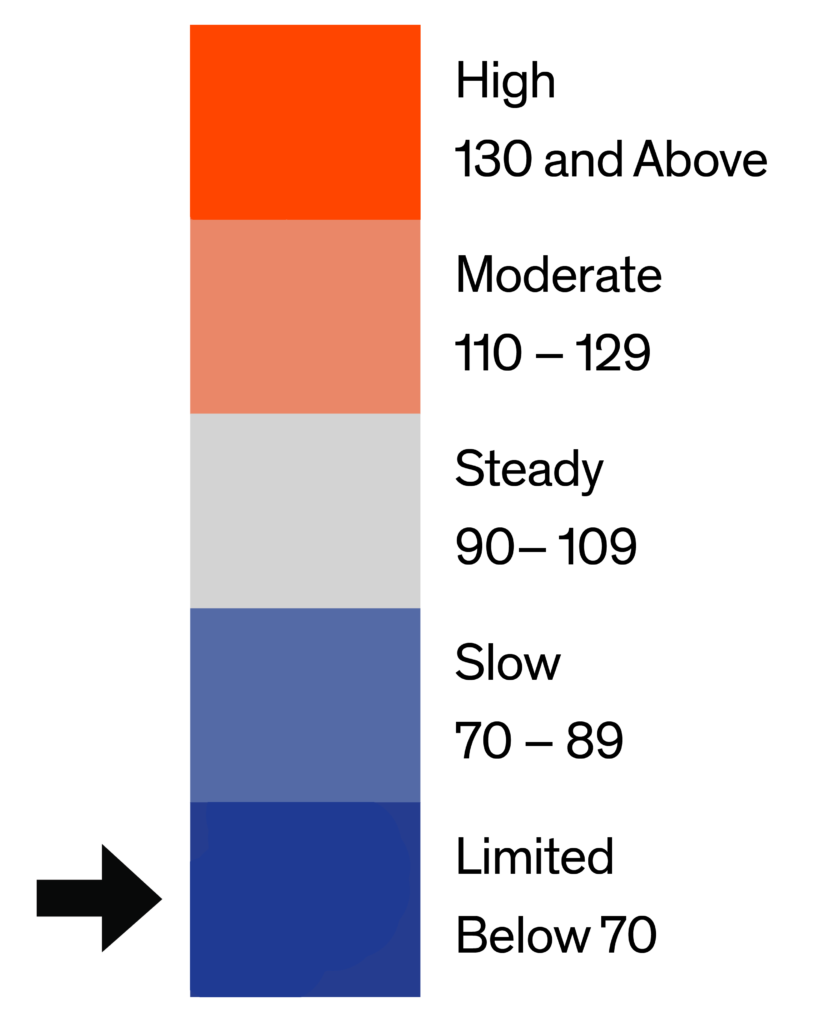
The Home Demand Index (HDI) for the Philadelphia metro area stands at 63 for this report period, up modestly from 61 last month but meaningfully below the 73 recorded during the same period one year ago. The month-over-month gain reflects early seasonal reactivation as buyer attention increases entering spring, though the pace of recovery remains muted relative to prior-year benchmarks. A ten-point year-over-year deficit indicates the Philadelphia market is operating in a softer demand environment than last spring, with affordability pressures and financing sensitivity continuing to constrain buyer engagement across segments.
Demand by home type in Philadelphia reflects broad softening relative to last year, though most segments are showing modest month-over-month improvement as the spring season begins. Entry-level single-family homes registered an index of 59, down from 64 last month and below the 73 posted one year ago, indicating that affordability constraints are bearing most heavily on first-time buyers in this market. Mid-range single-family homes edged up to 54 from 53 last month but remain well below last year’s 60, suggesting move-up activity is stabilizing at a subdued level with limited near-term acceleration. Luxury single-family homes posted 39, up from 33 last month but trailing last year’s 51 by a notable margin, pointing to cautious high-end engagement and ongoing hesitancy among discretionary buyers in the upper tier. Entry-level condos advanced to 95 from 88 last month, though they remain below last year’s 99, continuing to represent one of the more resilient demand categories as affordability-focused buyers seek lower-maintenance alternatives. Luxury condos improved to 91 from 82 last month but sit below last year’s 122, reflecting a meaningful year-over-year cooling in premium attached demand that warrants continued monitoring. Townhouses and twin homes rose to 76 from 72 last month, though still below last year’s 87, with the segment’s value proposition sustaining a stable base of buyer interest as spring activity gradually builds.
Monthly Statistics for March 2026
Home Demand
Index
Index
63
(Limited)
Home Demand Index
from prior month
from prior month
61
Home Demand Index
from prior year
from prior year
73
Index change
from prior month
from prior month
3.3%
Index change from
same time last year
same time last year
-13.7%
Bright MLS | T3 Home Demand Index
www.homedemandindex.com
Philadelphia | February 2026
Home Demand Index
The Home Demand Index (HDI) for the Philadelphia metro area is 60 this report period, reflecting a notable increase from 47 last month and signaling a rebound in buyer activity. Compared with the same period last year, when the index stood at 65, demand remains modestly lower on a year-over-year basis. Overall, market conditions point to improving momentum month over month, though activity has not fully returned to last year’s levels.
Demand by home type in Philadelphia shows renewed divergence this report period, with entry-level single-family activity improving modestly while remaining below last year’s levels. Mid-range single-family metrics indicate a sharp rebound from last month, though volatility suggests activity is being driven more by limited inventory than broad-based demand. Overall, buyer engagement remains uneven across segments, reflecting selective purchasing behavior and sensitivity to pricing and availability.
Monthly Statistics for February 2026
Home Demand
Index
Index
60
(Limited)
Home Demand Index
from prior month
from prior month
47
Home Demand Index
from prior year
from prior year
65
Index change
from prior month
from prior month
27.7%
Index change from
same time last year
same time last year
-7.7%
Bright MLS | T3 Home Demand Index
www.homedemandindex.com
Philadelphia | January 2026
Home Demand Index
The Home Demand Index (HDI) for the Philadelphia metro area is 46 in this report period, down sharply from 64 last month and below the 50 reading a year ago. This decline indicates that buyer activity has softened notably, pushing the market further into the Limited demand range after stronger conditions through much of last year. The pullback suggests more cautious buyers and potentially longer selling times, as demand resets to a quieter start-of-year pace.
Demand by home type in Philadelphia continues to show increasing divergence this report period, with notable volatility across single-family segments. Entry-level single-family homes have softened compared with both last month and last year, reflecting ongoing affordability pressures in the most accessible detached segment. Mid-range and luxury single-family homes continue to experience irregular activity, likely driven by limited inventory rather than broad-based buyer interest. Entry-level condos maintain some support, while luxury condos have weakened. Townhouses also remain subdued, reflecting cautious buyer behavior across these segments. Overall, the market continues to reflect uneven demand, with buyers approaching decisions deliberately and selectively.
Monthly Statistics for January 2026
Home Demand
Index
Index
46
(Limited)
Home Demand Index
from prior month
from prior month
64
Home Demand Index
from prior year
from prior year
50
Index change
from prior month
from prior month
-28.1%
Index change from
same time last year
same time last year
-8%
Bright MLS | T3 Home Demand Index
www.homedemandindex.com
Philadelphia | December 2025
Home Demand Index
The Home Demand Index (HDI) for the Philadelphia metro area is 62 this report period, down from 81 last month, signaling a clear month-over-month cooling in buyer activity. Demand is also below last year’s reading of 70, indicating softer conditions on an annual basis. With the index now in a slower range, overall market momentum appears to be easing as buyers remain cautious.
Demand by home type in Philadelphia shows growing divergence this period, led by a meaningful step-down in entry-level single-family activity from last month. Entry-level single-family demand is now lower than both last month and last year, indicating affordability is no longer providing the same level of support as it did earlier in 2025. Mid-range single-family metrics appear highly volatile in the provided data, but the broader pattern suggests a market where move-up demand is softer and increasingly dependent on limited, well-priced inventory. Luxury single-family homes are also seeing weaker demand, while lower-priced condos are slowing and higher-priced condos are holding relatively steadier. Townhomes, rowhouses, and twins continue to experience a moderate slowdown, consistent with broader trends across the market.
Monthly Statistics for December 2025
Home Demand
Index
Index
62
(Limited)
Home Demand Index
from prior month
from prior month
81
Home Demand Index
from prior year
from prior year
70
Index change
from prior month
from prior month
-23.5%
Index change from
same time last year
same time last year
-11.4%
Bright MLS | T3 Home Demand Index
www.homedemandindex.com
All reports for the Philadelphia Market Area.
List of available data files. Note that the data file includes all data for the report period across the entire Bright MLS footprint.